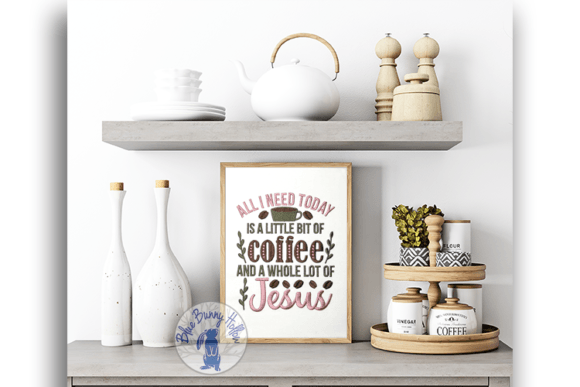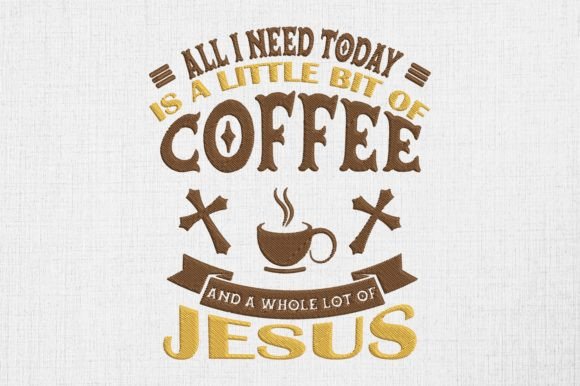
All I Need Today is Coffee and Jesus
First Impression: Warm, Witty, and Instantly Relatable
As an embroidery designer who’s prepped over 200 craft fair booths—from snowy Midwest markets to sun-drenched Southern pop-ups—I know what stops a shopper mid-aisle. All I Need Today is Coffee and Jesus lands with quiet confidence: not loud, not preachy, not overly cutesy. It’s warm, grounded, and gently humorous—like your favorite ceramic mug held in both hands on a slow Sunday morning. It reads as farmhouse-chic meets modern faith, with just enough coffee-shop soul to feel inclusive. That balance is gold for handmade product lines. It doesn’t scream; it invites.
Where It Shines: Craft Fair Product Placement That Converts
In my booth setup, I always lead with three anchor items: a large embroidered tote bag, a folded tea towel stacked beside a linen apron, and a set of small embroidered patches displayed on corkboard. All I Need Today is Coffee and Jesus performs strongest when given breathing room—and intention.
- Tote bag design: Centered on a natural canvas or oat-colored jute, this machine embroidery design reads clearly from six feet away. The phrase flows well across the horizontal plane, and its rhythm (two short anchors—“Coffee” and “Jesus”—bookending “All I Need Today is”) creates visual cadence.
- Tea towel embroidery: On a medium-weight cotton flour sack towel, it works beautifully in the lower third—just above the hem. Customers love that it feels useful *and* meaningful, not just decorative.
- Embroidered patch: As a sew-on or iron-on patch, it gains versatility. Buyers snap them up for denim jackets, backpacks, and kids’ lunchboxes—especially during holiday markets or church bazaars.
- Apron embroidery: Left chest placement (not pocket) keeps it personal but polished. Avoids overcrowding while reinforcing brand warmth for boutique makers and kitchen-focused Etsy sellers.
- Pillow covers & fabric pouches: Here, size matters. At 4–5 inches wide, the design retains legibility and charm. Smaller than that, letter spacing tightens and “Jesus” risks blurring—more on that below.
What Holds It Back: Practical Embroidery Designer Notes
This isn’t a “throw-it-on-and-go” embroidery file. It rewards attention—and punishes haste. As someone who’s unraveled too many dense stitch areas on textured towels, I’ll be direct:
- Stitch density: Watch the “J” in “Jesus” and the serif-style crossbar on the “C” in “Coffee.” Those fine details demand clean digitizing and careful stabilizer choice—especially on terry cloth or waffle-weave tea towels.
- Fabric texture matters: On thick, napped fabrics like heavy denim or quilted market bags, reduce scale by 5–7% or re-hoop with cutaway + tear-away combo stabilizer. Otherwise, letters lose definition.
- Curved surfaces = caution: Caps and curved pouches require repositioning or simplified versions. The original layout assumes flat fabric. Test on scrap first—don’t assume auto-fit will preserve spacing.
- Dark fabric? Check thread contrast. Ivory or light tan thread reads softly on navy or charcoal—but can vanish on black. Suggest a cream or heather gray thread for depth without loss of clarity.
Online & In-Person Impact: Why It Photographs Well and Sells Consistently
All I Need Today is Coffee and Jesus is unusually strong for digital use. Its balanced line length, clear word separation, and moderate height-to-width ratio make it ideal for printable mockups—no awkward cropping needed. Etsy sellers report higher click-through on listings where it appears on a linen apron draped over a wooden chair, paired with a steaming mug. That emotional context sells more than the design alone.
In person, it builds booth cohesion. When grouped with complementary designs—like “Brewed With Love” or “Grace Grows Here”—it forms a mini-collection that signals thoughtful curation, not random inventory. That perception lifts perceived value, especially among small shop owners building branded handmade product lines.
Production Realities: Batch-Friendly, But Not Blindly Scalable
Yes, you *can* run 30+ tote bags in one day—but only if you’ve tested hoop size compatibility, confirmed consistent tension across machines, and verified that your chosen thread colors don’t shift hue under different lighting (a common issue with ecru or oat tones). This machine embroidery design isn’t overly complex, but its charm lives in proportion and spacing—not speed.
For commercial embroidery, double-check licensing terms before selling finished products. The description says it “can be used,” but never assume commercial rights are included unless explicitly stated. When in doubt, contact the designer or vendor directly—better than a takedown notice at craft fair season.
Final Verdict: A Thoughtful Anchor for Faith-Based, Lifestyle, and Tea Coffee Niches
All I Need Today is Coffee and Jesus isn’t just another phrase stitched in satin stitch. It’s a mood, a moment, and a market-ready statement. It fits cleanly into the Tea Coffee category without leaning too hard on caffeine clichés—and honors its spiritual reference with sincerity, not kitsch. For embroidery business owners, it bridges sacred and everyday. For Etsy sellers, it’s evergreen—seasonless, searchable, and shareable.
My recommendation? Lead with it on your best-quality tea towel and a heavyweight canvas tote. Pair it with a real mockup—not just a digital render—so customers see how the stitch texture catches light, how the curve of the “J” holds up, and how the phrase feels *made*, not mass-produced. That authenticity is what turns a glance into a sale, and a craft fair visitor into a repeat buyer.
Before cutting your first production run: test the embroidery file on scrap fabric, review spacing at actual size, confirm hoop size compatibility, inspect stitch density under magnification, choose stabilizer based on fabric weight—not habit—and always, always create at least one finished product to hold, fold, and photograph in natural light. That’s how All I Need Today is Coffee and Jesus earns its place—not just on your table, but in your customer’s daily ritual.